
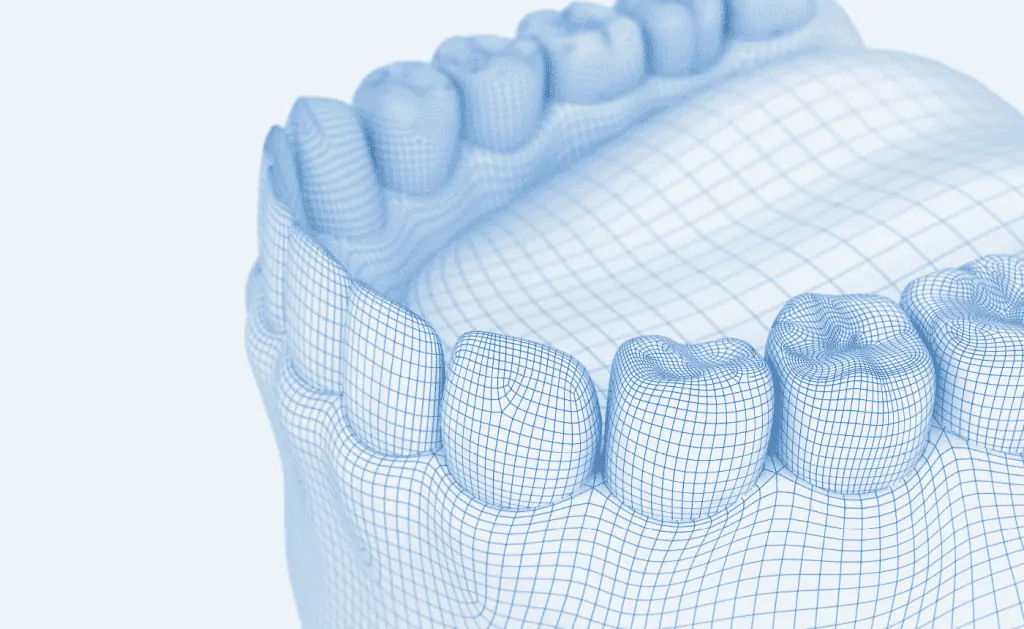
In medicine, a simple principle applies: you can only treat what you can see. For decades, the classic two-dimensional X-ray image was the gold standard. But the human jaw is not flat like a sheet of paper—it is a complex, three-dimensional structure full of neural “highways,” fine bone structures, and hidden cavities.
With cone beam computed tomography (CBCT), often referred to internationally as Cone Beam CT, we are able to image this space precisely. For you as a patient, this means diagnostics without “guesswork,” maximum safety during procedures, and significantly lower radiation exposure compared with conventional computed tomography (CT).
Why a standard X-ray is sometimes not enough
Imagine looking at a forest from the front. You see the trees in the first row, but what lies behind them is obscured. It is similar with 2D X-rays: structures overlap. Inflammation behind a tooth root or the exact position of a nerve in the jawbone often remains hidden.
A CBCT unit, by contrast, creates a digital twin of your jaw. We can rotate it on the computer, view it from any angle, and virtually slice it into sections to analyze every anatomical detail before we even pick up an instrument.
The three main advantages of 3D diagnostics
1. Guided safety for implants
Placing an implant is precision work within a millimeter range. In the past, the surgeon often had to assess the bone situation during the operation (“driving by sight”). Today, we use CBCT for what is known as backward planning:
- We measure the available bone (height, width, quality) precisely.
- We locate sensitive structures such as the inferior alveolar nerve or the maxillary sinus.
- The result: We can plan the ideal implant position on the computer in advance and often even print surgical guides that direct the implant precisely to the planned site. The risk of nerve injury is minimized, the procedure becomes less invasive, and it is often faster.
2. Root canal treatments: finding what is invisible
If a tooth still hurts despite root canal treatment, this is often due to tiny, hidden lateral canals that were not visible on a standard X-ray. CBCT makes the complex root canal system visible. We can see exactly how many canals a tooth has and how curved they are. This dramatically increases the success rate of preserving the tooth.
3. Surgery (wisdom teeth & more)
Before removing impacted wisdom teeth, we need to know: does the root wrap around the nerve? Is the tooth close to the maxillary sinus? With 3D images, we can choose the surgical approach in a way that protects these structures as much as possible.
Radiation exposure: a fair comparison
Many patients are put off by the word “tomography” because they think of the high radiation exposure of a classic medical CT (as commonly used in hospitals for head injuries). Here we can give the all-clear: CBCT was developed specifically for the head and neck region.
- Technology: Instead of scanning the body layer by layer, CBCT uses a cone-shaped beam (“cone beam”) that captures the area in a single rotation.
- Dose: As a result—depending on the device and settings—radiation exposure is up to 80% lower than with a conventional CT.
- ALADA principle: Even so, we never take X-rays without good reason, but always according to the principle “As Low As Diagnostically Acceptable”—as little as possible, as much as necessary for a reliable diagnosis.
Comfort instead of a tube
Another advantage for patients with claustrophobia: a CBCT unit is open. You do not have to go into a narrow tube. The scan is usually performed standing or sitting; the device rotates briefly around your head, and after 10 to 20 seconds it is over.
Conclusion: 3D diagnostics is not a luxury; in many complex cases, it is now the standard for responsible medicine. It turns assumptions into knowledge—and that is the best basis for your health.