
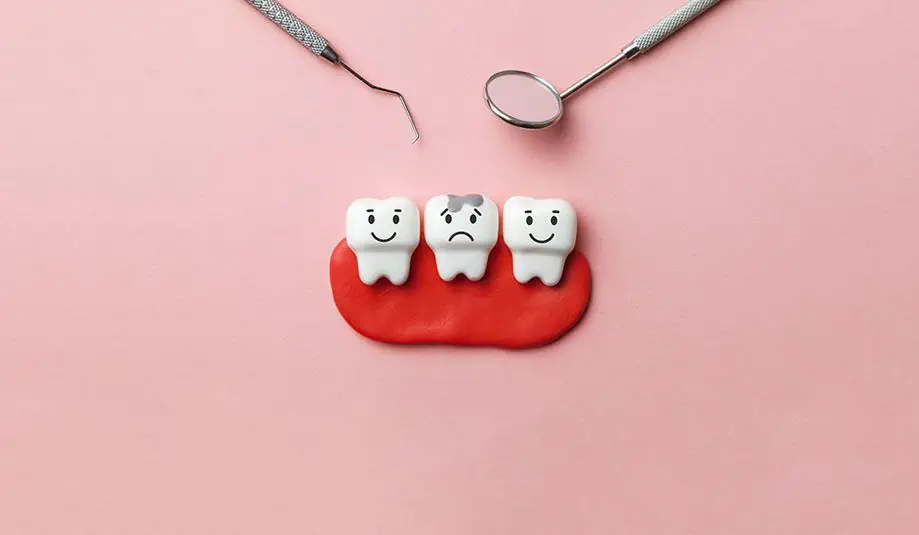
The children’s book about the two tooth trolls with pickaxes is a classic. However, from a medical perspective, this image is outdated. Tooth decay is not the destructive rage of little monsters, but a biochemical process.
Why is this distinction important for you? Quite simply: if you understand that tooth decay is a metabolic disease of dental plaque, you also understand how to stop the process before a drill becomes necessary. Let’s take a look under the microscope.
The Development Process
1. The Scene: Biofilm instead of “plaque”
Billions of bacteria live on your teeth. This is completely normal and healthy. These microorganisms organize themselves into a complex network known as biofilm (formerly plaque). As long as this ecosystem is in balance, nothing happens to your teeth. It only becomes critical when we feed the “wrong” bacteria.
2. The Fuel: Sugar is the engine
Certain bacteria in the biofilm (e.g., streptococci and lactobacilli) love fermentable carbohydrates. This includes not only obvious household sugar but also fructose, starch (chips, crackers), and hidden sugars in processed foods.
The chemical process:
- The bacteria metabolize the sugar lightning-fast.
- As a waste product, they excrete organic acids (e.g., lactic acid).
- This acid causes the pH level in the mouth to drop suddenly.
3. The Attack: Decalcification (demineralization)
Tooth enamel is the hardest substance in the human body, but it has a weakness: acid. If the pH level drops below a critical limit (approx. 5.5 to 5.7), minerals such as calcium and phosphate dissolve from the enamel lattice. The tooth becomes porous. This is the beginning of tooth decay—long before a cavity is visible. We call this initial caries (often recognizable as a chalky white spot).
4. The Rescue: Your saliva as a repair team
Normally, the body has its own repair system: saliva.
- Buffering: It neutralizes the acids and raises the pH level again.
- Remineralization: It is saturated with calcium and phosphate and redeposits these building blocks back into the tooth.
The problem of frequency: This repair process takes about 30 to 60 minutes. If you snack constantly or drink sugary beverages (including juice spritzers!) throughout the day, the saliva cannot keep up with the repairs. The balance tips permanently in favor of destruction.
Anatomical Risk Factors: Where the brush fails
Not every tooth is equally at risk. Tooth decay almost always begins at so-called predilection sites (niches):
- Fissures: The deep pits on the chewing surfaces of the molars are often narrower than a single bristle of your toothbrush. Bacteria can “work” here undisturbed for months.
- Crowding: Misaligned or crowded teeth prevent effective cleaning.
A word on “contagion” (transmission)
For a long time, it was said: “Never lick your baby’s spoon!” The fact is: decay-causing bacteria are transmissible (via saliva contact). However, modern studies show that the transmission of bacteria alone does not cause tooth decay. The environment is more decisive. If you provide your child with a low-sugar diet and good care, the bacteria cannot multiply explosively in the first place—even if they have been transmitted. Our advice: Hygiene is important, but panic is unfounded. Focus primarily on dietary habits.
Conclusion: Tooth decay is not inevitable. It is an imbalance between acid attacks and the restorative power of your saliva. With proper fluoridation and breaks between meals, you can keep this balance stable. This is how you can prevent tooth decay.